![[personal profile]](https://www.dreamwidth.org/img/silk/identity/user.png) freshfeeling
freshfeeling[It was decided in roughly November of 2023 that GameFAQs once-loved Top 10 Lists feature was being phased out. I had written a few lists between 2009 and 2012 and generally engaged with that community a fair bit, so I figured I would cross-post my lists on this site over ten years later, backdated. You may still be able to view the original version here.]




Have you ever really wanted to play a game you've already enjoyed, but found yourself debating whether it was worthwhile to trudge through the beginning of game, knowing that the beginning was the worst part? There are lots of games that have a bit of a slow start, sometimes due to a tutorial or an introductory sequence... but usually it's brief, necessary, and/or cool. There are lots of games, especially in the RPG genre, that have extremely slow starts that are a bit less forgiveable.
These slow starts can be for a variety of reasons: too much unskippable dialogue, poor character choice, limited character movement, or just being boring in the early game. The ten chosen below are all good games that start slowly for different reasons.
As an honorable mention and as an example, let's consider the case of Star Ocean: The Second Story (PS). It has the same massive variety of characters and equipment and endings as the rest of the series, with great graphics for its age, pretty good music, and the active battle system is just super fun to play. But it starts in a quiet forest, there's several minutes of dialogue. This text is accentuated by little exclamation marks that pop up over characters' heads when they're surprised and other such cute anime-ish graphics... and it happens all the time and stops the game for a few seconds each time.
The first quest is in the town of Salva, takes a couple minutes, and if you chose Claude as your starting character you'll be fighting alone for a while. He doesn't yet have any of the amazing sword techniques that appear later in the game, so combat is relatively boring. But this early in the game, Claude is actually the more interesting choice; if you chose Rena, you don't get to do... anything. She's tied up, waiting to be rescued by Claude. When you've completed this you get to sit through a lot more predictable dialogue, full of game-stalling emoticons. And, of course the worst part is that you have to go through this more than once for completion because there are two separate but very similar storylines. Much more than once if you want to play on a higher difficulty.
I really recommend playing Star Ocean 2, but to do so you should be prepared for a game that starts slowly. And that's what this list is all about.
#10: Final Fantasy XIII (PS3/360)
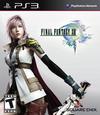
When I heard that Final Fantasy XIII had a 20+ hour introduction, I was sure that people were joking. I'm not just saying that because it makes it seem funnier or something, I actually thought I was being told a joke. Why shouldn't I have? I think the longest introduction segment I'd ever done was probably Wild ARMs, which was maybe 3 hours. And hey, it's funny! You start playing a game and it takes you maybe half of the whole game just to figure out what to do and why you're playing? Imagine if skee-ball was like that!
So it's a fairly good game, but I wouldn't want to play the beginning again. I like it, but because of the too-long introduction, it starts really slowly.
All kinds of media and popular reviewers were all going on about how long and linear the introduction was and how they got bored before they started actually playing the game... but now that everybody who wants to play it has had a chance to, if you ask them, they mostly say it's great. They'll say it has beautiful cutscenes and music, at least some likeable characters... and brought a faster pace to the gameplay, too. But, yes, in order to actually do anything, you have to be willing to walk towards glowing dots for several hours, mostly along non-descript linear pathways.
#9: Dragon Warrior IV (NES)
There are a lot of very good Dragon Quest (or Dragon Warrior) games, and this fourth one is definitely one of the finest console RPGs out there. You play through a chapter, each with a different character (or a few characters) of the party that will eventually help the story's hero defeat the great evil threatening the world. There are four of these introductory chapters where you develop and learn about each party member a bit, followed by a great "coming together" as the hero rounds them up in Chapter 5 - thus the subtitle of the DS remake, "Chapters of the Chosen". It's pretty epic.
No offense to Ragnar, of course. I like having him around later. I like the game, too... but because of starting with an uninteresting character, it starts really slowly.
Unfortunately, you start the game with Ragnar. I can't blame Enix for designing the game this way; it actually makes a lot of sense. Ragnar is generally the most basic character, being a straight-up soldier with the ability to attack and... well... yeah, that's it. He's completely alone throughout his quest, and in true Dragon Quest style it can be pretty challenging without putting in some early-game grinding. It might help an RPG newbie ease into the game, but it's honestly just a very boring start to a very good game.
#8: Pokemon FireRed & LeafGreen Versions (GBA)
Pokemon games have a tendency to start slowly, but it was more pronounced in the third generation remakes of the first Pokemon games. First, of course, you start with a big wad of text with a professor who tells you what Pokemon are; of course, you'd be kind of silly to have bought this game without knowing that... but that's not the big problem. Then can't go anywhere until you get a Pokemon, after which you have to use it to fight another Pokemon to whom you are very nearly statistically identical and should have a slightly more than 50% chance of winning. This could be a little discouraging to the many players who I'm sure lose that first battle... but that's not the big problem.
I guess the same could be said of many games, even with the Sprint Shoes in Final Fantasy VI... but frankly, that game had enough going on from the outset that it didn't need them as badly. Of course, I really like Pokemon games, I just wish my character would think to put his shoes on before he left the house. Because of the intentional limitation on character speed, it just starts really slowly.
The big problem is that you walk very slowly, and a lot of the game is walking. Even if you try to spend more of the time battling, in the early going you probably need to take a long, slow walk back to a Pokemon Center to rest after every couple of battles. After walking back and forth between the first few towns for a while, someone will give you running shoes, which allow you to walk twice as fast. Why the gris were they holding out on you?! With the first generation games, and a lot of older RPGs, yeah, nobody had invented running yet! But there is no excuse for preventing the player in a very slow game from walking fast just because you need them to suffer a little bit first!
#7: Phantasy Star (SMS)
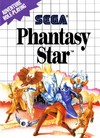
IThere's nothing specifically wrong with the original Phantasy Star that isn't wrong with dozens of other older console RPG titles, it's just quite pronounced in this game. The issue, of course, is the early-game grind. When the game starts, Alis can't do much of anything. She is weak and has no money, but she can get stronger and earn money by killing things (realism!). She can squish bugs with a sword, but really there's only one kind of bug she can squish reliably. After fifteen minutes of squishing the first kind of bug, you might be able to take on the second kind of bug; of course, after every 5 bugs or so you'll need to go back into town to rest up.
I love the Phantasy Star series but I don't know that I would ever play the original again because the beginning of the game is so agonizing. I liked it, but with an over-the-top early-game grind, it starts out too slowly.
Phantasy Star had a lot of originality and cool features in its time, but the early-game grind in this game is atrocious. It's very easy to wander slightly too far from the first city and get slaughtered by one of the weakest enemies in the game, at least until you earn your second party member. I know it's not necessary, but I have literally spent hours walking back and forth outside of Camineet because I didn't want to leave until I had bought some good equipment.
#6: Golden Sun: Dark Dawn (DS)
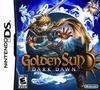
The first two Golden Sun games came out in quick succession, which was suitable for two games tied so closely together. We waited for several years before we got this sequel, and the reviews are mostly positive, but a little bit mixed. Some people may be judging it with nostalgia on their minds, or comparing it directly to its predecessors. Really, the game is fairly good, with very similar gameplay to the first two games in the series. Among the flaws pointed out in the reviews is the lengthy introduction: There is a really long Star Wars-esque text at the beginning that describes exactly what happened in the other two games in the series (which were, themselves, quite lengthy). This is unskippable. I wonder how many players, like myself, had just played Golden Sun and The Lost Age before picking up Dark Dawn. That can be frustrating.
The second big complaint about this game, besides the long introduction, is the complete lack of difficulty. Having these overpowered characters around, giving painfully obvious tutorial instructions and cleaning up the easiest random encounters in the game has a drastic and negative effect on how much I enjoy the game's introductory quest. I feel quite confident that I would have been better off without them. It's a pretty good game, but because of the long introduction with extremely trivial gameplay and difficulty, it starts really slowly.
It doesn't end there. The start of the game includes a huge amount of text introducing the characters and concepts. When you finally gain control, you have to do a lot of very trivial things in the early going before any action takes place, like climbing a ladder, finding your clothes around the house, and walking one screenlength to the right. Your first big quest is to find your friend in a forest, but there's a lot of dialogue as two overpowered temporary characters hem and haw about whether they're even going to let you fight or not. I was itching for a Golden Sun-style fight by this point! I found myself actually kind of angry at these characters - they call my main character (who is standing right there!) weak and he hasn't even had a chance to do anything yet. For the first dungeon, which is just stupidly easy, these overpowered characters join and help out from time to time and force you through tutorials about combat. The combat is identical to the first two Golden Sun games, which had no such introductory tutorials before the first dungeon.
#5: Final Fantasy VIII (PS)
This game is actually the one that inspired this list for me, and really I don't even like Final Fantasy VIII very much; I just acknowledge those who do. I wouldn't mind the love story if it was between any people I liked at all. But anyway, Final Fantasy VIII begins with a really slick FMV with a cool training battle between Squall and Seifer. It's really energetic and well-made and the music gets you really excited for the game you're starting. You see neat floating quotes and scenery that you can't help but feel must be foreshadowing a great gaming experience.
Eventually you get to go to a cave and hit things, but what makes the beginning of Final Fantasy VIII seem so slow to me compared to so many other games is that it has this amazing, frantic introduction... but as soon as you get control of the game, the pace changes from that of a wild cheetah chasing a gazelle to that of your housecat having its bath during your dinner party. It's an okay game, but it makes you think it's going to start very quickly... and then it does very much the opposite.
Then you wake up in a hospital bed and you can't move. People talk to you in boring grey text blocks. The first other playable character you're introduced to shrugs and sighs, appearing like she's completely sick of the game, even though it just started. When you're allowed to move, you have to go to school, which is like real world school except it's nearly empty and it's slower and it's more boring and you don't learn anything and it only has four rooms and it takes 3 minutes to travel between any of them and the music is a lullaby. Okay, some of that last sentence might be exaggerated but not by much.
#4: Rock Band (Multi)
Rock Band games don't seem like they should be able to start out slow, and in a lot of ways they don't. By Rock Band 2, at least, very few songs needed to be unlocked. In Rock Band (the first) though, groups of songs needed to be unlocked by accessing them in the tour mode. As such, when you're just starting out, you're very likely to be playing the same few songs over and over.
I'm sure some people will say the same is true of the Guitar Hero series, and it is, but I don't feel that this style of game really became great until Rock Band came out.
I got so sick of Nirvana's "In Bloom", Radiohead's "Creep" and Weezer's "Say It Ain't So" when this game was new. At least this franchise learned from its mistake; only Harmonix-sponsored bonus songs are unlockable in Rock Band 2, and Rock Band 3 has all the in-game songs right out in the open. Regardless of some of the songs needing to be unlocked, when you're new at these games and trying to improve, you're very likely to be playing the simpler songs repeatedly as you learn the ropes of Rock Band. I guess there's a workaround in that you can buy DLC... but then you're paying money and waiting briefly for downloads instead of doing something exciting, and I'd rather not have to pay to avoid playing the same few songs.
Basically, you're very likely to start with slower and simpler songs, over and over, either because the game forces you with an unlockable setlist or maybe just because you can't help it. I love Rock Band, but because you have to play the same uninteresting content repeatedly, it starts out very slowly.
#3: The Legend of Zelda: Ocarina of Time (N64)
On the NES, if you wanted storyline in your games, you often had to read the manual. Of course, this was optional, and sometimes it was kind of nice. Gradually we became entitled to more in-game story and dialogue, which was done nicely in The Legend Of Zelda: A Link To The Past. Then, in Link's Awakening, we met Kaepora Gaebora the owl, and that was when the trouble started: the Zelda series now has a crazy amount of hand-holding and "guide" characters, and an immense load of (very unfortunately) unskippable text.
It's worth noting that in Majora's Mask, you can more-or-less replay any dungeon you want whenever you want, bypassing this issue nicely.
You sit through a lengthy and unskippable sequence that might be okay if you haven't played before. Then you watch a fairy fly around (inefficiently). Then it nags you. Then you talk to Saria. Then you get to move for 3 minutes. After the first dungeon, you sit through another lengthy cutscene but this one is irrelevant to the entire game. Then Saria. Then the owl. And between unskippable dialogue with all these characters whose purpose is generally to introduce you to the game, guide you, and teach you things, you have Navi the fairy hassling you. It takes an awful lot of patience for me to get to do what I really want to do when I play Ocarina of Time: explore, get gadgets, solve puzzles with gadgets, seek heart containers, miss exactly one heart container, get mad, drink profusely...
The concept of skippable cutscenes for people who have already played was pretty new when Ocarina of Time hit the scene I guess, and I can forgive it for what's an excellent game. But it's a pretty big time commitment to start playing this game, and sometimes I just don't want that. I like this game of course, but because of the numerous lengthy and unskippable dialogues with guide characters, it starts really slowly.
#2: Sid Meier's Civilization (PC)
Much of this can be said about any Civilization game, but I'm thinking specifically of the first. First, you pick a great nation with a great leader as your avatar. Then you settle a city by pushing "b" or clicking an icon. Choose what direction to take with your research and select what your new capital city will work to produce: maybe a warrior unit. Then you push enter. Then you push enter. Then you push enter. Then you push enter. Then you push enter. Then you push enter. Then you push enter. Then you push enter. Then you push enter. Then you push enter. Then you push enter. Then you push enter. Then you push enter. Then you push enter.
Civilization games are wonderful, beautiful creations that I may have put more hours into than personal hygiene over the course of my life, but starting a civilization takes a lot of time, and that's a lot of pushing enter. The newer entries allow you a few more early game options, but it's still pretty slow at the beginning. They're great, but because there's nothing to do at the dawn of civilization, they all start very slowly.
By about this time you might have a warrior that you can move around the map. But don't move him very far, because if a barbarian walks into your only city while it's complete undefended, your entire civilization is destroyed. So maybe just leave the warrior there and push enter. Then push enter. Then you push enter. Then you push enter. And so on.
#1: Valkyrie Profile (PS)
Valkyrie Profile is an amazing style of game that critics loved and a lot of players go back to over and over. Somehow, nobody has tried to duplicate it, as even the other games in this series are substantially different in terms of gameplay. I could see this being one of those games I would go back to maybe once a year or more, just to experience, if not for the issue I have with the way the game begins.
Like I said, everything about this game is wonderful... at least the first time. Sometimes knowing that I have to sit through the same lengthy play on my emotions prevents me from wanting to pick up Valkyrie Profile again. I love this game, but because of the forced repetition of unchanging cutscenes with very little player involvement, it starts really slowly.
When you begin Valkyrie Profile, you have the option to select a difficulty level. Among other effects, this choice dictates which characters, items, dungeons and endings will be available. For each character you acquire throughout the game, there is generally a detailed, emotional, and beautiful scene during which they are recruited by the valkyrie (i.e. they die, generally in a heroic way) to fight in Ragnarok. The first such sequence featuring the first two characters who are recruited is awesome, but it takes a very long time, and it's always the same. Actually, all of the sequences where the Valkyrie recruits an Einherjar are pretty much the same each time. Because there are so many different ways this game can play out, and because you can try it on a few different difficulty levels, you'll definitely want to play Valkyrie Profile a few times. Unfortunately, the first 15 minutes or so of sameness is very slow. I guess it is possible to save after the introductory sequences so that you don't need to sit through it again, but you would still have to do so at least once for each difficulty level you want to play.
I recommend all of these games to the gaming community at large, but I feel that all of them have significant design flaws. I, for one, would rather get into the game and really do something than stare patiently at slow moving dialogue, unnecessary tutorial, or movie sequences I may have seen before. Of course, there are other series that have lengthy introductory sequences that are much easier to stomach; you generally wouldn't want to miss the introduction sequences in the Metal Gear Solid series, for example.
Other games that came to mind for me were Metroid Prime (GC) and Metroid: Other M (Wii), but when I thought about it, Metroid Prime's introductory sequence wasn't that long, was pretty necessary to the gameplay and was really cool the first time around, and Metroid: Other M actually had pretty fantastic pacing. I think the reason I thought of Metroid games at all was that I wanted a bunch of cool power-ups right away so I could sequence break, not because of any actual issue with the pace of the game. The only side-scroller that came to mind at all was Super Star Wars: The Empire Strikes Back (SNES) because of the crazy difficulty of the first level... but it doesn't really get that much easier, so it didn't seem like a very good example.
Anyway, I'm sure there are dozens of examples of great games with very slow starts that I haven't thought of or didn't rate so highly.


