I recently learned that, as of some point shortly before November 21, 2023, GameFAQs once-loved Top 10 Lists feature was being phased out. This feature was launched on October 26, 2005, in honour of GameFAQs' 10th anniversary. It started with a very meagre feature set, being strictly text-based until roughly 2009 when it started supporting things like images and a form of markdown. There was kind of a bell curve to the quality, in general, scaling up while the lists became popular and as the feature gained features, and then starting to scale down in probably roughly 2015 as GameFAQs started dying its slow death. 91210user doesn't help things.

It's a bit of an aside, but as for the question of "Is GameFAQs dying?": In my opinion, yes, or at least mostly. Its forums are too old compared to so many modern forms of internet media and this site just isn't the way most of the masses consume their gaming-related content anymore. Its usership can easily be measured and has dropped off considerably. Hopefully its already-posted resources can stand the test of time, though. There are also still forums I really like on GameFAQs, too, and nothing seems to be superceding them... so I hope those can exist a good while longer.

I'll somewhat miss the Top 10 List feature. Between 2009 and 2012 I posted six of these lists and I've generally engaged with the Top 10 List board and community a fair bit, participating in ideation, feedback and general discussion a lot over a period of years (mostly 2010 through 2016). However, I admit it's time for it to wind down.

Since this feature's days are numbered and I'm not sure what extent my contributions will be available longer term, I've cross-posted them into this blog, backdated (such that they are now the earliest entries on this site). They are as follows:
Although they aren't mine to crosspost here, I'll also mention that I contributed to The Top 10 Games Of 2011, As Chosen By Top 10 List Writers (where my pick was Pokemon Black and White Version), The Top 10 Games Of 2013, As Chosen By Top 10 List Writers (where my pick was Path of Exile), and I was mentioned by DDJ in The Top 10 GameFAQs Top Ten Lists, Part 3 for my accessibility list.
[It was decided in roughly November of 2023 that GameFAQs once-loved Top 10 Lists feature was being phased out. I had written a few lists between 2009 and 2012 and generally engaged with that community a fair bit, so I figured I would cross-post my lists on this site over ten years later, backdated. You may still be able to view the original version here.]

In my current line of work, I meet with young people with different kinds of disabilities. Governments and advocacy groups are making a big push for accessible media and web design so it's a good line of work to be in. I happen to be the computer guy around the office, so it's pretty natural that I often end up talking about games with people with disabilities. Amazingly, I know several intelligent individuals who happen to have severe difficulty with reading and/or math who regularly play World of Warcraft, League of Legends, Minecraft, StarCraft II and other current games.

I fell in love with the original Final Fantasy at about age 8. Recently, perhaps because of my work experience, I was thinking about what it would be like for a person with ADHD to play the original Final Fantasy. What a terrible experience that would be! Certainly it could be even worse for those with a learning disability, hearing loss, vision loss, or difficulty using their hands.

I know that accessibility in games matters to a good part of the population. Drawing on knowledge from my work, education and personal experiences I thought of several things affecting the accessibility of modern video games. It's hard to know whether to write as a gamer or a professional in the field of disability so this article is a bit of a mixture. I acknowledge that this list may not appeal to everybody's interests, but if you're into learning about issues affecting gaming you should be able to enjoy this. As another caution, I'm not a Ph.D in the field or anything; I'm just another gamer who happens to have some knowledge and concern about this subject matter. And, finally, as with any GameFAQs Top 10 List, this is all my opinion.


#10: Good HUD Design

Some people, perhaps as the result of a learning disability, have poor mathematical reasoning and can miss the sigificance of a quantity and a total. Some people have difficulty making judgments and decisions based on visually-presented data. In either case, many people are able to compensate for one impairment using their strength in the other.

Good: A well-designed heads-up display (HUD) should display all of the important information in a way that can be easily understood - if the game designer is unable to do this with both a graphic and a value, they should use a graphic and the meaning of this graphic should be clear. High contrast would be a good idea. What would be even better is allowing the player to customize the HUD.

Some Examples of Accessible HUD design: Fallout 3 (Multi), Super Mario Kart series, God of War (PS2), Deux Ex series (Multi)

Bad: A poorly-designed HUD might give all of the information as numbers, especially if the numbers don't have any maximums or context - Final Fantasy 8 comes to mind.

Some Examples of Non-Accessible HUD design: Call of Duty: Modern Warfare 2 (Multi), Goldeneye (N64), Final Fantasy 8 (PS), Secret of Mana (SNES)

Controversial: Some of the HUDs that typically get praise include those from the Metroid Prime subseries and the Halo series, where it is designed so that you actually see the information the character sees. They look cool, they present the necessary information, and they're also tied into the gaming experience. I think the majority of gamers, including myself, love these... but they're controversial with many gamers also saying that the HUD covers up too much of the field of vision and just makes the game awkward. Dead Space is a similar case, and arguably the coolest HUD ever, although some information can actually be pretty hard to read.

#9: Voice Control

Speech recognition technology has come a long way in the last several years. Voice sample passwords are not uncommon anymore. Dragon NaturallySpeaking dictation software is inexpensive and can really help people to write or control their computer who otherwise may not be able to. Controlling games with voice could help someone who has poor fine motor skills or is otherwise uncoordinated, has lost the use of their hands, or perhaps has a visual impairment. And really, if it was done right, it could just help people play in a fun new way.
 
Good: It's fun to use voice control in the DS games that use it, like Ace Attorney, although that doesn't mean these games are more accessible. There are some cool applications that add voice control to other PC games that work reasonably well. Try looking up "Say2Play", which adds voice control for several functions in a good variety of modern FPS games (and more).
  
Bad: Well, voice control hasn't exactly caught on, so it's hard to name bad examples. Sometimes my Nintendog misbehaves, but so do real dogs.
  
Controversial: I didn't like the use of voice control in Mario Party 7. It didn't work very well - I'd be shouting "right" and my dude would keep going left. It didn't help that I was playing with friends who would keep yelling "left". But this isn't a real complaint and I'd like to see more games try to take advantage of this technology. I'm excited to see how Mass Effect 3 does with it.

#8: Motion Control

Many called it a gimmick, and many loved it when it was new whether they thought it was a gimmick or not. I think it's safe to say, however, that motion control in video games is here to stay, although it may not be for the hardcore gamer. Here are some people it definitely is for: a number of people prefer kinesthetic experiences, and their memory or responsiveness improve when associated with movement. It can also help for people with an attention deficit or people unable to use traditional controllers for whatever reason. And, yeah, the kids love it.
 
Good: Good motion control should make use of the player's body to replace another form of action. It doesn't mean everyone has to be standing up to play bowling or leaping around the room to play tennis, but that there's a natural link between the physical action of the player and what takes place in the game. And although movement is the whole point, to really be accessible it should also be useable by someone who is sitting down.
  
Some Examples of Useful Motion Control for Accessibility: Wii Sports (Wii), The Legend of Zelda: Twilight Princess (Wii), LostWinds (Wii), WarioWare series (Wii)
  
Bad: The bad thing was when many developers decided to put motion controls in every game because it's there. When I have to shake a Wiimote to do what is normally done by pushing "A", that's stupid. This has nothing to do with all of the low-quality games featuring motion controls, it's a criticism of the useless motion controls that were added to games for novelty's sake without any real benefit. Some games also require an absurd degree of precision to control them.
  
Some Examples of Not Useful Motion Control for Accessibility: Mario Party 8 (Wii), Lego Star Wars: The Complete Saga (Wii), Bomberman Blast (Wii), Kinect Star Wars (360)

#7: Difficulty Levels

It seems like such a simple thing. Although it was certainly around for ages before the movement for accessible media gained speed, having the option to reduce (or increase) difficulty is hugely helpful to open any game up to more users. In addition to being useful as a training tool or scaffolding for any player, there are many people who, because of a deficit in their processing speed or perhaps a lack of fine motor skills, simply won't be able to play some games as well as others... at least not at first.
 
Good: The right way to do difficulty levels is to reduce the impact of the difficult aspects of a game. This can mean reducing the number of enemies, making opponents' AI less effective, slowing down the opposition, or removing certain obstacles all together. Even simply granting extra lives can be hugely useful in a platformer or a shooter.
  
Some Examples of Difficulty Levels Done Right: Mega Man 10 (Multi), Wolfenstein 3D (Multi), Rock Band series (Multi), Devil May Cry (PS2)
 
Bad: The wrong way to do difficulty levels is to deprive the player of the experience of the game. I feel good about beating a game's hard mode, but that doesn't mean someone who isn't as good shouldn't be able to enjoy the game. This idea takes me back to the original Golden Axe on Genesis, where on the easy mode that I was playing (at the age of 7), the game would end after only a few (fairly trivial) levels. This is not to say that there shouldn't be an achievement or some worthwhile bonus content for people who can step up to the higher difficulties, but I think punishing someone who isn't as good at the game isn't the right idea. And in other games, like Street Fighter IV, even the easy mode gradually becomes ridiculously challenging. I guess that isn't wrong per se (and like I said, I like hard games: gimme Super Ghouls n' Ghosts!), but it's annoying.
  
Some Examples of Difficulty Levels Done Wrong: Golden Axe (Gen), Twisted Metal II (PS), Castlevania (N64), Double Dragon II (NES), Valkyrie Profile (PS)
  
Controversial: I think a controversy with difficulty levels is when games take pity on the player. It's noticeable with Devil May Cry and WarCraft III where the easier difficulty levels open up if the player is unsuccessful. In general I think it's a good trend: players take the risk of trying a normal difficulty level before taking it down a notch, if they need to. Having not unlocked these lower difficulty levels remains as a prize for particularly skilled players. That goes for single-player experiences, at least: I think Nintendo really gets this one wrong with the use of blue shells and free final smashes in competitive games.

#6: Subtitles

This one is obvious, I suppose. Subtitles are just a good idea; lots of people play with the volume low. Furthermore, lots of people have hearing loss or simply don't retain all of the auditory information they receive.
 
Good: Just use a clear font and subtitle dialogue and other significant audio cues. It hasn't been hard for long time. Heck, for a long time this is all there even was in games with dialogue.
  
I don't need to list games that do this right and I don't need to discuss how to do it wrong. Just allow the option to read what characters speak in-game. Test every game with the sound off. Let me know if I hit a switch and it caused something to rumble behind me. Simple stuff. It's mostly been perfect for ages. When I think of an early game that would've been terrible without subtitles though, I think of Hexen: Beyond Heretic (Multi). Raven Software did it right, even way back then.

#5: Memory Aids

There are a lot of games where memory aids aren't a big deal. I mean, there are lots of things that are useful to remember in fighting games, but I'm more speaking about important plot details. This applies mostly to RPGs and adventure games, as well as any large sandbox game. Lots of people have trouble remembering what has happened so far in these kinds of games and it adds some degree of difficulty for them. It could be caused by a brain injury, a processing deficit with their visual or auditory memory, or perhaps they just have difficulty paying attention to the game's content.
 
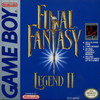
Good: So what am I even talking about when I say "memory aid"? Something that helps you to remember the events of the game so far. This can come in many forms: the earliest I remember is the "Memo" feature in Final Fantasy Legend II. Pokemon FireRed/LeafGreen also introduced a feature that would play back the last few significant events that took place when you haven't played the game for more than two days. In a number of current gen games, you have the option to rewatch the FMVs or other noteworthy scenes to refresh yourself, or at least some form of quest log.
  
Some Examples of Games with Useful Memory Aids: Final Fantasy Legend II (GB), Pokemon FireRed/LeafGreen and newer (GBA/DS), Diablo II (PC)
  
Bad: This isn't exactly a mainstream idea right now, so there are too many bad examples to name. Just to give a couple of examples of current games that would really benefit from the ability to rewatch cutscenes, though: L.A. Noire (Multi), The Witcher 2 (PC/360), Final Fantasy XIII (360/PS3)
  
Controversial: I suppose if there were any controversy about this it would be if someone argued that remembering the events of the game was a part of the challenge. To anyone making that argument: you're on a site called GameFAQs.
  
On A Related Note: There are some games where you can buy hints, including EarthBound (SNES), Legend of Mana (PS), some Goemon games, and some Zelda games. It's not quite the same as a memory aid, but it can give you some direction if you've completely forgotten what you're doing in the game. Definitely a good idea for any game with a large world and lots of exploration.

#4: Good Control Schemes

This is surely a little bit subjective, but worth discussing. Having a good control scheme is huge for making a game accessible. In addition to just being a good idea, it can help those with underdeveloped motor skills, poor kinesthetic memory, or a deficit affecting their processing speed.
 
Good: Some really amazing games have really simplistic control schemes. Ivy The Kiwi? on Wii uses motion and one button. Arkanoid and its many knockoffs use two directions and no buttons. Heavy Rain, with some very minor modifications, could be played with one button (*cough* that was a slam). I have seen WarCraft III being played by an individual paralyzed from the neck down using a mouth-controlled puff-and-sip joystick. And he did reasonably well! Sure, that game has some menus and hotkeys, but many RTS games have elegantly simple controls for people who just want to have fun with them. Metroid: Other M also reduced a pretty complex game to a simple control scheme that still left you feeling very much in control.
  
Some Examples of Games With Notable Accessible Control Schemes: WarCraft III (PC), Metroid: Other M (Wii), Super Smash Bros. Brawl (Wii), Ivy The Kiwi? (Wii/DS)
  
Bad: As with graphics, the control schemes that exist in reality are far more sophisticated and beautiful than they can or will ever be in video games. The human body has over 200 joints, each moving in a whole bunch of directions, and it works in a crazy variety of environments. And yet we sit on couches and watch screens. I'm not saying this to make anyone feel guilty; the idea is that complex control schemes aren't what makes a game fun.
 
Some Examples of Games With Inaccessible Control Schemes: Steel Battalion (XBOX), many professional wrestling games, a huge number of N64 games, and Battlefield 1942 (PC) - where the key to open your parachute is "H"
  
Controversial: I guess the controversy with control schemes is simply whether the masses really want realistic games or not. Gaming control schemes, at least those that don't use motion control (or some kind of brain reader), will never, ever approach realism... but they can try, if we keep adding buttons. But when you ask serious gamers what their favourite game controllers are you generally hear about Nintendo's SNES gamepad, Sony's Dualshock series, or Sega's Saturn controller. I, for one, don't actually want anything more complex than those.

#3: Voice Acting / Reading

Voice acting is huge now and it has opened up a world of games to a wide audience. Screen reading, that would allow gamers to have menu text and such read to them, would be even better. A person with any vision loss, a disability affecting their ability to read, or even just a weakness in visual attention and memory can really enjoy games that are read aloud. With voice acting, the entire RPG genre suddenly opens up to these individuals, and it does a lot of other good as well.
 
Good: From an accessibility standpoint, games don't even need voice acting so much as they could use a very basic built-in, optional screenreader - I haven't seen that yet, but I don't think it's a long way off. There's a lot of plain text all over the place in MMOs that would be fairly easy to have read aloud to the player, should they want to hear it. Right now though, at least voice acting is finally commonplace. It's pretty good, too. You can complain about Final Fantasy X's voice acting all you want, but a lot of people can enjoy that game that may not have had the opportunity without voice acting. If you started gaming in the 80s like I did, you know that it's far beyond "red warrior needs food".
  
Bad: I'm not going to complain about voice acting, what concerns me with regards to accessibility is just having the game content verbalized. Obviously, this is really rare in older games and most downloadable games simply because of technical restrictions like filesize. Perhaps there will come a time when some wonderful company creates an optical character recognition (OCR) engine for their console, allowing all available games to be read aloud as needed.
  
Controversial: Although it takes some effort, some games on PCs can be used with a screen reader. And people with disabilities have been able to browse the internet using screen readers for years now. The biggest obstacle to this is inaccessible web design, and, notably, there is currently no way to read text in Flash programs (technically it is possible to do this in some cases with very time-consuming OCR). Flash games themselves might have voice acting, but in general Flash applications are considered a no-no with regards to accessibility.

#2: Contrast and Shapes

Using high-contrast graphics when colour is important to the gameplay is critical to accessibility. Combining any colour cues with other visual cues, like varied shapes, also helps. There are a number of people with partial vision loss, colourblindness, or a weakness in visual perception who require this. Roughly 7% of males (1 in 14) have a form of colourblindness that causes difficulty distinguishing red from green. Think, for a moment, about how the colours red and green are used in video games. Then think about how many times you've been killed by a teammate in your favourite FPS. It doesn't help that real is brown.
 
Good: A recent trend in games, probably spearheaded by Star Wars: Knights of the Old Republic, is to have a high contrast graphics setting or colourblind mode. Some games also use pictograms and flags in conjunction with their little red and green symbols to clarify what those symbols mean. There are a lot of puzzle games that are based around colour (like Bejeweled and Panel De Pon) that use a mixture of colours and graphics to make the puzzles solveable regardless of colourblindness.
  
Some Examples of Games That Use Contrast or Shapes To Improve Accessibility: Star Wars: Knights of the Old Republic (XBOX/PC), World of Warcraft (PC), Bejeweled (Multi), Call of Duty: Modern Warfare 3 (Multi)
  
Bad: Bad is having a game that can only be solved by observing colour - a famous example is the hacking process in BioShock 2. Try checking out a screenshot of this with the red and green colouring removed. Another issue for people who are colourblind is reading maps, so games that depend heavily on maps that indicate features (especially if they use only red and green dots) present a huge obstacle for many players.
 
Some Examples of Games That Make Things Hard for Gamers Who Are Colourblind: Puyo Puyo (Multi), Command and Conquer (Multi), BioShock 2 (Multi), Super Puzzle Fighter II Turbo (Multi)
 
Controversial: Adding in weird random shapes and using special colour schemes probably seems like it would ruin the realism in most games. I bet there's even a portion of the GameFAQs userbase out there rolling their eyes at this entry. But as in many games that have already implemented a colourblind mode, it can pretty easily be made optional... and the developers could increase their market by roughly 7%.

#1: Zoomable Text / Adjustable Font Size

This is a big one and it's very rarely addressed, even with the big push for accessibility. Having the ability to enlarge text helps people with even slight vision loss, including many of the elderly... and it's just generally nice.
 
Good: I can't even think of an example of a game that natively allows you to adjust the font size, although you can on Wii's News channel. Some games also play better than others using accessibility software to enlarge text, like the built-in zoom tools in Windows and Mac OSX. Some PC games allow you to configure the font size, and many of those with rich modding communities have patches that allow text scaling.
 
Bad: Like I said, this hasn't exactly caught on. But the worst of the worst would be MMOs and BioWare games, which have actually made their text smaller and smaller with each new release. Even gamers with great new TVs are complaining about the font size.
 
Examples of Games That Would Really Benefit From Adjustable Font Size: Star Wars: The Old Republic (Multi), The Elder Scrolls V: Skyrim (Multi), Dragon Age 2 (Multi), Assassin's Creed II (Multi), Mass Effect II (Multi), Final Fantasy XI (PC/PS2)
 
Controversial: There's no controversy. It's a good idea and every game with a substantial amount of text should have it.

Honorable mentions often find themselves in this bottom section, but my categories were pretty broad so there aren't many to discuss. I considered doing one on generally balanced gameplay, which still isn't a bad idea. Another fairly minor one that springs to mind is the way some Wii Virtual Console games have had patches applied to slightly reduce flickering effects, possibly because these could trigger epileptic seizures. Not a bad idea at all.
 
Accessibility is an easily misunderstood movement. I am well aware that blind people won't enjoy all mainstream games even if they're compatible with screen readers. We can't make every aspect of every game for every person and still enjoy rich, interactive multimedia experiences. But for the mostpart, the items listed above are either really simple to implement or a good idea regardless of accessibility concerns. Developers can be doing a little bit more on each title and it will not only increase the number of people that can play their game, but it will improve the overall quality of their games. As a bonus, it's really good for a developer's image.
 
This whole idea isn't mainstream. Not yet. Most governments and corporations are currently focusing on the web, publications, and film. You can bet it will come to gaming though. In a lot of ways it already has.
[It was decided in roughly November of 2023 that GameFAQs once-loved Top 10 Lists feature was being phased out. I had written a few lists between 2009 and 2012 and generally engaged with that community a fair bit, so I figured I would cross-post my lists on this site over ten years later, backdated. You may still be able to view the original version here.]

After the Top 10 Excaliburs and the Top 10 Masamunes, DetroitDJ commented that he liked "this emerging list series a lot". It wasn't really planned as a series, but DDJ had a couple of suggestions for what could be down the road. Among these suggestions was the Top 10 Ragnaroks.
 
Ragnarok, in Norse mythology, is the battle between the Aesir, the gods of Valhalla, and the Vanir. Several important figures in the mythology are expected to die during Ragnarok, and then the world as we know it will end. There aren't that many games that focus on the mythological idea of Ragnarok, and personally I'm glad that the market isn't flooded with games featuring the end of the world.
 
Anyway, the issue in coming up with this list is that the Top 10 Ragnaroks was going to have more of a Final Fantasy slant than even the Top 10 Masamunes and the Top 10 Excaliburs, at least if it focused only on weapons. Like Excalibur and Masamune, the Final Fantasy series has adopted this name regularly to denote extremely powerful swords. There aren't that many weapons named Ragnarok in other games... so instead of focusing on just weapons named Ragnarok, to keep this list at least a little bit varied, I'm going to consider places and events called Ragnarok as well, as long as they result in death. This list will list the deadliest.
 
Ragnaroks still aren't exactly commonplace, and there's still a lot of Final Fantasy (you've been warned), but I think this list will be more interesting this way. I hope some of you agree..

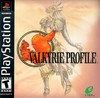
#10: Valkyrie Profile (PS)

Everybody who knows this game probably expected this one. Valkyrie Profile is a beautiful game with amazing graphics and sound and a simple-to-play, difficult-to-master battle system emphasizing the timing of your attacks. The relevant part is that it's a story based loosely on Norse mythology where one of the three valkyries, Lenneth, is tasked by Odin to recruit human warriors called "Einherjar". These warriors generally die a noble death in the mortal world of Midgard, then train with Lenneth before being sent to Valhalla to participate in Ragnarok, the battle at the end of the world.
 
Ragnarok is of some importance in this game in that, when you begin, you are sure the ultimate goal of the game is to participate in Ragnarok and ultimately have some kind of positive outcome. Each time you access the world map to travel between cities or dungeons, the game reminds you how many periods are left until the end of the world. The introductory sequences sure make Ragnarok out to be pretty important as well, but there are two main paths through the game and Ragnarok is only significant in one of them. In the medium ending, or "B Path", Lenneth Valkyrie and her Einherjar predictably participate in Ragnarok and have a chance to beat the big bad guy. This ending is adequate, but not suitably epic, nor is it canon with newer games released in this series.
 
When you go for the good ending, or "A Path", Ragnarok is only mentioned in passing. It's not possible to describe very well without spoiling everything, but Ragnarok happens in the background while the Aesir of Valhalla end up fighting amongst themselves, a lot of Gods die, and Lenneth Valkyrie really saves the day. With the "A Path" being what I would consider to be the proper way to play and end Valkyrie Profile, Ragnarok is nothing in the face of what happens immediately afterward. There is implied death, but it doesn't seem to matter much in the scope of this game. The end of the world has to be worth at least #10, though.

#9: Breath of Fire III (PS)

Breath of Fire III is the story of the last member of the brood, a race of dragon people, trying to find the reason that his people were exterminated centuries ago. In a world filled with lore of Dragons and magic, the main character, Ryu, eventually meets a scientist named Momo. It's hard to say why she accompanies the group for so long, but since the game eventually takes on a heavy sci-fi flavor it's definitely useful to have someone with her technical skills around.
 
Among her other gifts, Momo is one of the game's better magic users, and she eventually gains access to an attack spell called Ragnarok. Only used by Momo and a few enemies, Ragnarok actually has the same statistical power as Nina's deadly Mjollnir spell, making it a wise investment to keep boosting Momo's Intelligence statistic as much as possible. And it looks pretty great: a shadow looms over the battlefield when cast, followed by a screen-blocking meteor. End of the world indeed.
 
This Ragnarok is pretty impressive, but Breath of Fire III isn't a magic-heavy game; there are actually quite a few better attacks at endgame. Deadliness: Moderate, although the animation suggests that this spell should be able to destroy continents. This one gets the #9 spot.

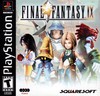
#8: Final Fantasy IX (PS)

In Final Fantasy games that feature a Ragnarok, generally speaking, Ragnarok is a step up from the Excalibur. In Final Fantasy IX, the guy who usually wields the big swords is Adelbert Steiner, and he has the privledge of wielding both of these great weapons. Both are acquired through sidequests and could probably be passed over pretty easily - you won't want to miss the Ragnarok, though.
 
Steiner's Excalibur is his third-strongest weapon, and it teaches the useful Climhazzard ability that hits all enemies for heavy damage. The Ragnarok is an even better choice, as his second-strongest weapon, exclusively allowing him access to the Shock ability. Shock essentially triples Steiner's damage, practically guaranteeing that he will hit the 9999 damage cap. There is a stronger weapon, but it's that Excalibur II you've heard about. Getting the Excalibur II means getting to the end of the game in 12 hours, so to put things simply, you aren't getting it on your first try.
 
It's a very useful weapon regardless, but for that first leisurely playthrough at least, Ragnarok will be Steiner's best weapon. Deadliness: High. That makes it #8 in my books.

#7: Golden Sun (GBA)

In Golden Sun, Ragnarok was an extremely valuable psynergy attack that could be used only by Isaac, and it is very helpful in his quest to prevent the four great lighthouses from being lit. Unlike most psynergy, Ragnarok's power was based on Isaac's regular physical attack, but boosted slightly and earth-elemental. Given that Isaac is generally more suited as a fighter than a psynergy specialist, and that Isaac has a great affinity for the earth element, this made it his attack of choice against most bosses. And it looks pretty awesome: a giant sword quickly descends and pierces the ground under the enemy, causing a great explosion.
 
In the second and third Golden Sun games, Felix and Matthew can also use Ragnarok with the same great results... but a lot of new psynergy abilities were introduced including an upgraded version of Ragnarok called Odyssey. Odyssey pretty much makes Ragnarok obsolete, unless you've set your characters to very weak classes. And with all the new Djinni introduced, it became easier to select different and better classes for these characters that don't have access to Ragnarok. Not that Ragnarok is bad, but there are other good attack options available if you are using the superior Ninja or Samurai lines of classes.
 
Particularly if we're only considering the original Golden Sun, Ragnarok is quite good. You can use this stylish and powerful attack fairly early in the game to great effect. Deadliness: High, but only to a single target. I rank it #7 among Ragnaroks.

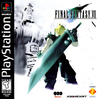
#6: Final Fantasy VII (PS)

Final Fantasy VII is the story of a guy with sword-like hair and a big sword chasing down another guy with a big sword in order to sword, er, I mean save the world. Along the way he finds many other very large swords. One of them is called Ragnarok.
 
In keeping with Final Fantasy tradition, Cloud's Ragnarok is a very strong weapon. Its power is very close to that of Cloud's best weapon, the Ultima Weapon, but Ragnarok has several other slight advantages. Ragnarok has a larger bonus to Spirit (and thus better magic defense), Ragnarok's materia slots can still gain AP, and Ragnarok doesn't have Ultima Weapon's special trait of damage based on Cloud's HP. This means that the Ragnarok can still do great damage when Cloud's hit points are very low. There are lots of reasons to be using the Ragnarok at endgame.
 
Breaking Final Fantasy tradition, every player will get a Ragnarok as part of the storyline; no crazy treasure hunt, minigame or optional boss needed here! Deadliness: Quite high, especially when paired with Omnislash or something like that. It also has considerable style points. Yes, this Ragnarok is generally great. #6.

#5: Battletoads (NES)

Ragnarok (or Ragnarok's World) was actually the name of the planet on which some of the Battletoads games took place. No references to Norse mythology here, although it's a pretty cool planet. The varied nature of its many tunnels just screams "video game setting"!
 
First, you have your beautiful surface world, lush with vegetation, water, and humanoid pigs. Second, a giant straight tunnel deep into the underground filled with electricity and mean birds. Third, a racetrack that appears to be built on some kind of exaggerated animal flesh or something. Fourth, an ice cave. Fifth, deeper underground and somehow naturally lit, a series of waterfalls and chasms that are perfect for extreme surfing. Sixth, a series of caves filled with giant snakes that must be climbed upon to get out. Seventh, a tunnel full of flames, lava and inexplicable lasers. Eighth, ninth and tenth, still underground, a crazy machine-filled series of shafts, tubes and spikes.
 
Planet Ragnarok is a little bit different in the same-titled Game Boy game, but it's still really... um... strange. Strange, fun, diverse, and worth revisiting every so often. Although it is unusual to compare a sword to a magic spell to a planet, the difficulty of this game is legendary; you could say it's harder to survive than a sword or a magic spell. Deadliness: Very high, especially for player 2, who always dies on stage 11. Let's call this one #5..

#4: Mega Man Zero 4 (GBA)

WMega Man Zero 4 was the final game in the Mega Man Zero subseries, where Zero from the Mega Man X series repeatedly tries to help out small human resistance groups in a disastrous future where maverick reploids have more-or-less taken over the world. Throughout the Mega Man Zero games, we find that all the humans are generally being isolated, manipulated or killed by different parties. Ragnarok was a big part of what made Mega Man Zero 4 such a grand finale to this darkly-themed series.
 
Early in the game, we learn that the antagonist, Dr. Weil, calls his scheme "Operation Ragnarok", and the eight "robot masters" are actually referred to as the "einherjar warriors". The plan is to use Ragnarok to destroy nearly all areas that humans are able to inhabit so that the survivors are all forced to live under Dr. Weil's rule. After defeating the einherjar, Ragnarok is revealed to be a satellite designed to destroy the Earth's natural environments. For some reason, instead of using it to rain destruction upon the Earth, Dr. Weil instead chooses to crash the entire satellite into the human settlement that Zero had been using as his base of operations.
 
In the epic final showdown, Zero fights with Ragnarok itself as it plunges into Earth's atmosphere. Of course, we know that the humans ended up being fine because they came out with the Mega Man ZX series that stars humans. Ragnarok was pretty significant, and its relationship with Norse mythology in that it caused "the end of the world as we know it" was actually kind of clever. Deadliness: Massive, although I think the total number of people it killed was zero. *cough* Let's call it #4.

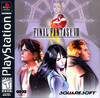
#3: Final Fantasy VIII (PS)

When the idea of the Top 10 Ragnaroks was proposed, the Ragnarok from Final Fantasy VIII was suggested as a surprise guest! The reason this one is distinct among Ragnaroks from the Final Fantasy series is that it isn't a weapon, but rather a vehicle. The Ragnarok is one of at least three space shuttles created by the advanced civilization of Esthar. These shuttles were used to drag an evil sorceress' tomb into outer space years before the start of the game. What happened in the seventeen years after that... we don't know.
 
At one point in Final Fantasy VIII, some of the main characters are literally lost and drifting through the cosmos. It is a powerful moment where the player feels completely helpless. And then, by the most pronounced instance of deus ex machina I've ever seen in a game, out of anywhere they could be in the vastness of space, they drift directly into the abandoned space shuttle Ragnarok. The shuttle is filled with monsters when you find it, but when the monsters are destroyed you are not only saved from the horrible fate of drifting endlessly through space... but you've also got some stylin' transportation for the rest of the game. It looks kind of like a gigantic flying dragon.
 
The Ragnarok is used as a weapon on one occasion, showing that it has access to a large beam cannon and two large gripping "claws" on the front. I've sure if you had more occasions to use it offensively, it would be pretty effective. This is explored somewhat in Dissidia 012 Final Fantasy where Laguna Loire uses a weapon that looks like the Ragnarok in an attack called "Ultimate Ragnarok Cannon".
 
Deadliness: Unknown, as it never actually comes close to killing anything, but I'd imagine it could take out an army. Did I mention that the space shuttle Ragnarok is a great place to play cards? That totally makes it worthy of spot #3.

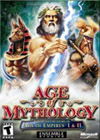
#2: Age of Mythology (PC)

Ragnarok in Age of Mythology is a god power available to the god Baldr of the Norse civilization. Most of the best god powers cause some kind of major interference or destruction over a radius. Ragnarok, however, is quite difficult to use effectively... and a bit more difficult to predict.
 
Ragnarok can only be evoked in the Mythic Age, toward the end of a game. When used, all regular villagers or dwarves will suddenly convert into a special unit called "hero of ragnarok". These strong units use more resources than villagers, and you lose the villages who were working to maintain your civilization's wealth. This makes your army suddenly and drastically grow in power, but the hit on your economy and production is dangerous. Most would say that Ragnarok is best used as a final "big push" against a strong opponent, and that one must be careful to time this properly. Having as many villagers as possible with good upgrades and positioning before Ragnarok begins is important.
 
This Ragnarok is unique and interesting as an RTS play strategy and, of course, it can be pretty deadly. Deadliness: Quite high; after all, if you use it well a civilization is destroyed, and if you don't... well, in all likelihood, your civilization is destroyed. I guess that's not a good thing, but judging by the scale of deadliness this Ragnarok should probably be #2.

#1: Final Fantasy VI (SNES)

In the second half of Final Fantasy VI, you are exploring a world which has recently undergone some changes, and trying to find the allies you had made earlier in the game. If you can find your friend Locke Cole (who is able to pick locks), you can find a few survivors who have locked themselves away in a ruined city overrun by monsters. One of these is an old man who apparently smiths swords, who asks a simple but very difficult question that is familiar to many who have played this game: the sword, or the stone?
 
The man has found a piece of magicite, the remains of a magical esper, and believes it can be forged into a very powerful sword. If you choose the sword, you won't be disappointed: like many swords named Ragnarok, it is awesome. It has the highest power in the game, always delivers critical hits at the cost of some magic power, provides some big stat boosts, and increases your evasion statistics by 30. The evasion is a big deal: it'll basically make about 25% more attacks miss the character. Oh, and it occasionally casts a super-powered Flare spell at your enemy each time you swing it. Final Fantasy VI's Ragnarok is a beast! And it's not even the best weapon in the game: you can swap your Ragnarok for an Illumina (AKA Lightbringer) by betting it at the colosseum, which is even better. Choosing the sword Ragnarok effectively gives access to some truly game-breaking equipment setups.
 
The other option is to choose the stone. If you keep Ragnarok in magicite form, the esper Ragnarok can be summoned to change an enemy into an item, but that isn't really the big draw of it. Characters who hold this magicite will be able to learn the powerful Ultima spell. Ultima in this game is ridiculously broken. It goes through barriers, it never misses, and it hits all enemies for crazy damage. Ultima is easily the game's strongest spell.

Deadliness: Absolutely crazy whether you go sword or stone, and the sword even provides some defensive ability. I guess that's what makes it such a hard decision. If you think the sword or the stone ain't good enough, try playing the GBA version of Final Fantasy VI - you can get both! That ought to make it good enough for #1.

So that's the list. Isn't the end of the world wonderful?
 
Here are some other notable games with deadly Ragnaroks: Final Fantasy: Dawn of Souls (GBA), Final Fantasy III (NES), Final Fantasy IV (SNES), Final Fantasy V (SNES), Final Fantasy X (PS2), Final Fantasy XII (PS2), Final Fantasy Tactics (PS), Final Fantasy Tactics Advance (GBA). I told you there was a lot of Final Fantasy.
 
I can't really think of many other named weapons that are both interesting and frequently recurring as those I've already written about, so this list "series" is kind of dead for now. Kind of. And for now.
[It was decided in roughly November of 2023 that GameFAQs once-loved Top 10 Lists feature was being phased out. I had written a few lists between 2009 and 2012 and generally engaged with that community a fair bit, so I figured I would cross-post my lists on this site over ten years later, backdated. You may still be able to view the original version here.]

Have you ever really wanted to play a game you've already enjoyed, but found yourself debating whether it was worthwhile to trudge through the beginning of game, knowing that the beginning was the worst part? There are lots of games that have a bit of a slow start, sometimes due to a tutorial or an introductory sequence... but usually it's brief, necessary, and/or cool. There are lots of games, especially in the RPG genre, that have extremely slow starts that are a bit less forgiveable.
 
These slow starts can be for a variety of reasons: too much unskippable dialogue, poor character choice, limited character movement, or just being boring in the early game. The ten chosen below are all good games that start slowly for different reasons.
 
  
As an honorable mention and as an example, let's consider the case of Star Ocean: The Second Story (PS). It has the same massive variety of characters and equipment and endings as the rest of the series, with great graphics for its age, pretty good music, and the active battle system is just super fun to play. But it starts in a quiet forest, there's several minutes of dialogue. This text is accentuated by little exclamation marks that pop up over characters' heads when they're surprised and other such cute anime-ish graphics... and it happens all the time and stops the game for a few seconds each time.
 
The first quest is in the town of Salva, takes a couple minutes, and if you chose Claude as your starting character you'll be fighting alone for a while. He doesn't yet have any of the amazing sword techniques that appear later in the game, so combat is relatively boring. But this early in the game, Claude is actually the more interesting choice; if you chose Rena, you don't get to do... anything. She's tied up, waiting to be rescued by Claude. When you've completed this you get to sit through a lot more predictable dialogue, full of game-stalling emoticons. And, of course the worst part is that you have to go through this more than once for completion because there are two separate but very similar storylines. Much more than once if you want to play on a higher difficulty.
 
I really recommend playing Star Ocean 2, but to do so you should be prepared for a game that starts slowly. And that's what this list is all about.


#10: Final Fantasy XIII (PS3/360)
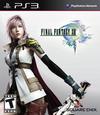
When I heard that Final Fantasy XIII had a 20+ hour introduction, I was sure that people were joking. I'm not just saying that because it makes it seem funnier or something, I actually thought I was being told a joke. Why shouldn't I have? I think the longest introduction segment I'd ever done was probably Wild ARMs, which was maybe 3 hours. And hey, it's funny! You start playing a game and it takes you maybe half of the whole game just to figure out what to do and why you're playing? Imagine if skee-ball was like that!

All kinds of media and popular reviewers were all going on about how long and linear the introduction was and how they got bored before they started actually playing the game... but now that everybody who wants to play it has had a chance to, if you ask them, they mostly say it's great. They'll say it has beautiful cutscenes and music, at least some likeable characters... and brought a faster pace to the gameplay, too. But, yes, in order to actually do anything, you have to be willing to walk towards glowing dots for several hours, mostly along non-descript linear pathways.
 
So it's a fairly good game, but I wouldn't want to play the beginning again. I like it, but because of the too-long introduction, it starts really slowly.

#9: Dragon Warrior IV (NES)

There are a lot of very good Dragon Quest (or Dragon Warrior) games, and this fourth one is definitely one of the finest console RPGs out there. You play through a chapter, each with a different character (or a few characters) of the party that will eventually help the story's hero defeat the great evil threatening the world. There are four of these introductory chapters where you develop and learn about each party member a bit, followed by a great "coming together" as the hero rounds them up in Chapter 5 - thus the subtitle of the DS remake, "Chapters of the Chosen". It's pretty epic.

Unfortunately, you start the game with Ragnar. I can't blame Enix for designing the game this way; it actually makes a lot of sense. Ragnar is generally the most basic character, being a straight-up soldier with the ability to attack and... well... yeah, that's it. He's completely alone throughout his quest, and in true Dragon Quest style it can be pretty challenging without putting in some early-game grinding. It might help an RPG newbie ease into the game, but it's honestly just a very boring start to a very good game.
 
No offense to Ragnar, of course. I like having him around later. I like the game, too... but because of starting with an uninteresting character, it starts really slowly.

#8: Pokemon FireRed & LeafGreen Versions (GBA)

Pokemon games have a tendency to start slowly, but it was more pronounced in the third generation remakes of the first Pokemon games. First, of course, you start with a big wad of text with a professor who tells you what Pokemon are; of course, you'd be kind of silly to have bought this game without knowing that... but that's not the big problem. Then can't go anywhere until you get a Pokemon, after which you have to use it to fight another Pokemon to whom you are very nearly statistically identical and should have a slightly more than 50% chance of winning. This could be a little discouraging to the many players who I'm sure lose that first battle... but that's not the big problem.

The big problem is that you walk very slowly, and a lot of the game is walking. Even if you try to spend more of the time battling, in the early going you probably need to take a long, slow walk back to a Pokemon Center to rest after every couple of battles. After walking back and forth between the first few towns for a while, someone will give you running shoes, which allow you to walk twice as fast. Why the gris were they holding out on you?! With the first generation games, and a lot of older RPGs, yeah, nobody had invented running yet! But there is no excuse for preventing the player in a very slow game from walking fast just because you need them to suffer a little bit first!
 
I guess the same could be said of many games, even with the Sprint Shoes in Final Fantasy VI... but frankly, that game had enough going on from the outset that it didn't need them as badly. Of course, I really like Pokemon games, I just wish my character would think to put his shoes on before he left the house. Because of the intentional limitation on character speed, it just starts really slowly.

#7: Phantasy Star (SMS)
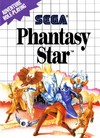
IThere's nothing specifically wrong with the original Phantasy Star that isn't wrong with dozens of other older console RPG titles, it's just quite pronounced in this game. The issue, of course, is the early-game grind. When the game starts, Alis can't do much of anything. She is weak and has no money, but she can get stronger and earn money by killing things (realism!). She can squish bugs with a sword, but really there's only one kind of bug she can squish reliably. After fifteen minutes of squishing the first kind of bug, you might be able to take on the second kind of bug; of course, after every 5 bugs or so you'll need to go back into town to rest up.

Phantasy Star had a lot of originality and cool features in its time, but the early-game grind in this game is atrocious. It's very easy to wander slightly too far from the first city and get slaughtered by one of the weakest enemies in the game, at least until you earn your second party member. I know it's not necessary, but I have literally spent hours walking back and forth outside of Camineet because I didn't want to leave until I had bought some good equipment.
 
I love the Phantasy Star series but I don't know that I would ever play the original again because the beginning of the game is so agonizing. I liked it, but with an over-the-top early-game grind, it starts out too slowly.

#6: Golden Sun: Dark Dawn (DS)
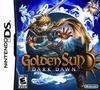
The first two Golden Sun games came out in quick succession, which was suitable for two games tied so closely together. We waited for several years before we got this sequel, and the reviews are mostly positive, but a little bit mixed. Some people may be judging it with nostalgia on their minds, or comparing it directly to its predecessors. Really, the game is fairly good, with very similar gameplay to the first two games in the series. Among the flaws pointed out in the reviews is the lengthy introduction: There is a really long Star Wars-esque text at the beginning that describes exactly what happened in the other two games in the series (which were, themselves, quite lengthy). This is unskippable. I wonder how many players, like myself, had just played Golden Sun and The Lost Age before picking up Dark Dawn. That can be frustrating.

It doesn't end there. The start of the game includes a huge amount of text introducing the characters and concepts. When you finally gain control, you have to do a lot of very trivial things in the early going before any action takes place, like climbing a ladder, finding your clothes around the house, and walking one screenlength to the right. Your first big quest is to find your friend in a forest, but there's a lot of dialogue as two overpowered temporary characters hem and haw about whether they're even going to let you fight or not. I was itching for a Golden Sun-style fight by this point! I found myself actually kind of angry at these characters - they call my main character (who is standing right there!) weak and he hasn't even had a chance to do anything yet. For the first dungeon, which is just stupidly easy, these overpowered characters join and help out from time to time and force you through tutorials about combat. The combat is identical to the first two Golden Sun games, which had no such introductory tutorials before the first dungeon.
 
The second big complaint about this game, besides the long introduction, is the complete lack of difficulty. Having these overpowered characters around, giving painfully obvious tutorial instructions and cleaning up the easiest random encounters in the game has a drastic and negative effect on how much I enjoy the game's introductory quest. I feel quite confident that I would have been better off without them. It's a pretty good game, but because of the long introduction with extremely trivial gameplay and difficulty, it starts really slowly.

#5: Final Fantasy VIII (PS)

This game is actually the one that inspired this list for me, and really I don't even like Final Fantasy VIII very much; I just acknowledge those who do. I wouldn't mind the love story if it was between any people I liked at all. But anyway, Final Fantasy VIII begins with a really slick FMV with a cool training battle between Squall and Seifer. It's really energetic and well-made and the music gets you really excited for the game you're starting. You see neat floating quotes and scenery that you can't help but feel must be foreshadowing a great gaming experience.

Then you wake up in a hospital bed and you can't move. People talk to you in boring grey text blocks. The first other playable character you're introduced to shrugs and sighs, appearing like she's completely sick of the game, even though it just started. When you're allowed to move, you have to go to school, which is like real world school except it's nearly empty and it's slower and it's more boring and you don't learn anything and it only has four rooms and it takes 3 minutes to travel between any of them and the music is a lullaby. Okay, some of that last sentence might be exaggerated but not by much.
 
Eventually you get to go to a cave and hit things, but what makes the beginning of Final Fantasy VIII seem so slow to me compared to so many other games is that it has this amazing, frantic introduction... but as soon as you get control of the game, the pace changes from that of a wild cheetah chasing a gazelle to that of your housecat having its bath during your dinner party. It's an okay game, but it makes you think it's going to start very quickly... and then it does very much the opposite.

#4: Rock Band (Multi)

Rock Band games don't seem like they should be able to start out slow, and in a lot of ways they don't. By Rock Band 2, at least, very few songs needed to be unlocked. In Rock Band (the first) though, groups of songs needed to be unlocked by accessing them in the tour mode. As such, when you're just starting out, you're very likely to be playing the same few songs over and over.

I got so sick of Nirvana's "In Bloom", Radiohead's "Creep" and Weezer's "Say It Ain't So" when this game was new. At least this franchise learned from its mistake; only Harmonix-sponsored bonus songs are unlockable in Rock Band 2, and Rock Band 3 has all the in-game songs right out in the open. Regardless of some of the songs needing to be unlocked, when you're new at these games and trying to improve, you're very likely to be playing the simpler songs repeatedly as you learn the ropes of Rock Band. I guess there's a workaround in that you can buy DLC... but then you're paying money and waiting briefly for downloads instead of doing something exciting, and I'd rather not have to pay to avoid playing the same few songs.
 
Basically, you're very likely to start with slower and simpler songs, over and over, either because the game forces you with an unlockable setlist or maybe just because you can't help it. I love Rock Band, but because you have to play the same uninteresting content repeatedly, it starts out very slowly.
 
I'm sure some people will say the same is true of the Guitar Hero series, and it is, but I don't feel that this style of game really became great until Rock Band came out.

#3: The Legend of Zelda: Ocarina of Time (N64)

On the NES, if you wanted storyline in your games, you often had to read the manual. Of course, this was optional, and sometimes it was kind of nice. Gradually we became entitled to more in-game story and dialogue, which was done nicely in The Legend Of Zelda: A Link To The Past. Then, in Link's Awakening, we met Kaepora Gaebora the owl, and that was when the trouble started: the Zelda series now has a crazy amount of hand-holding and "guide" characters, and an immense load of (very unfortunately) unskippable text.

You sit through a lengthy and unskippable sequence that might be okay if you haven't played before. Then you watch a fairy fly around (inefficiently). Then it nags you. Then you talk to Saria. Then you get to move for 3 minutes. After the first dungeon, you sit through another lengthy cutscene but this one is irrelevant to the entire game. Then Saria. Then the owl. And between unskippable dialogue with all these characters whose purpose is generally to introduce you to the game, guide you, and teach you things, you have Navi the fairy hassling you. It takes an awful lot of patience for me to get to do what I really want to do when I play Ocarina of Time: explore, get gadgets, solve puzzles with gadgets, seek heart containers, miss exactly one heart container, get mad, drink profusely...
 
The concept of skippable cutscenes for people who have already played was pretty new when Ocarina of Time hit the scene I guess, and I can forgive it for what's an excellent game. But it's a pretty big time commitment to start playing this game, and sometimes I just don't want that. I like this game of course, but because of the numerous lengthy and unskippable dialogues with guide characters, it starts really slowly.
 
It's worth noting that in Majora's Mask, you can more-or-less replay any dungeon you want whenever you want, bypassing this issue nicely.

#2: Sid Meier's Civilization (PC)

Much of this can be said about any Civilization game, but I'm thinking specifically of the first. First, you pick a great nation with a great leader as your avatar. Then you settle a city by pushing "b" or clicking an icon. Choose what direction to take with your research and select what your new capital city will work to produce: maybe a warrior unit. Then you push enter. Then you push enter. Then you push enter. Then you push enter. Then you push enter. Then you push enter. Then you push enter. Then you push enter. Then you push enter. Then you push enter. Then you push enter. Then you push enter. Then you push enter. Then you push enter.

By about this time you might have a warrior that you can move around the map. But don't move him very far, because if a barbarian walks into your only city while it's complete undefended, your entire civilization is destroyed. So maybe just leave the warrior there and push enter. Then push enter. Then you push enter. Then you push enter. And so on.
 
Civilization games are wonderful, beautiful creations that I may have put more hours into than personal hygiene over the course of my life, but starting a civilization takes a lot of time, and that's a lot of pushing enter. The newer entries allow you a few more early game options, but it's still pretty slow at the beginning. They're great, but because there's nothing to do at the dawn of civilization, they all start very slowly.

#1: Valkyrie Profile (PS)

Valkyrie Profile is an amazing style of game that critics loved and a lot of players go back to over and over. Somehow, nobody has tried to duplicate it, as even the other games in this series are substantially different in terms of gameplay. I could see this being one of those games I would go back to maybe once a year or more, just to experience, if not for the issue I have with the way the game begins.

When you begin Valkyrie Profile, you have the option to select a difficulty level. Among other effects, this choice dictates which characters, items, dungeons and endings will be available. For each character you acquire throughout the game, there is generally a detailed, emotional, and beautiful scene during which they are recruited by the valkyrie (i.e. they die, generally in a heroic way) to fight in Ragnarok. The first such sequence featuring the first two characters who are recruited is awesome, but it takes a very long time, and it's always the same. Actually, all of the sequences where the Valkyrie recruits an Einherjar are pretty much the same each time. Because there are so many different ways this game can play out, and because you can try it on a few different difficulty levels, you'll definitely want to play Valkyrie Profile a few times. Unfortunately, the first 15 minutes or so of sameness is very slow. I guess it is possible to save after the introductory sequences so that you don't need to sit through it again, but you would still have to do so at least once for each difficulty level you want to play.
 
Like I said, everything about this game is wonderful... at least the first time. Sometimes knowing that I have to sit through the same lengthy play on my emotions prevents me from wanting to pick up Valkyrie Profile again. I love this game, but because of the forced repetition of unchanging cutscenes with very little player involvement, it starts really slowly.

I recommend all of these games to the gaming community at large, but I feel that all of them have significant design flaws. I, for one, would rather get into the game and really do something than stare patiently at slow moving dialogue, unnecessary tutorial, or movie sequences I may have seen before. Of course, there are other series that have lengthy introductory sequences that are much easier to stomach; you generally wouldn't want to miss the introduction sequences in the Metal Gear Solid series, for example.
 
Other games that came to mind for me were Metroid Prime (GC) and Metroid: Other M (Wii), but when I thought about it, Metroid Prime's introductory sequence wasn't that long, was pretty necessary to the gameplay and was really cool the first time around, and Metroid: Other M actually had pretty fantastic pacing. I think the reason I thought of Metroid games at all was that I wanted a bunch of cool power-ups right away so I could sequence break, not because of any actual issue with the pace of the game. The only side-scroller that came to mind at all was Super Star Wars: The Empire Strikes Back (SNES) because of the crazy difficulty of the first level... but it doesn't really get that much easier, so it didn't seem like a very good example.
 
Anyway, I'm sure there are dozens of examples of great games with very slow starts that I haven't thought of or didn't rate so highly.

[It was decided in roughly November of 2023 that GameFAQs once-loved Top 10 Lists feature was being phased out. I had written a few lists between 2009 and 2012 and generally engaged with that community a fair bit, so I figured I would cross-post my lists on this site over ten years later, backdated. You may still be able to view the original version here.]

There are a lot of misconceptions about the legendary Excalibur, and a lot of confusion. Are King Arthur's Excalibur and the Sword in the Stone the same weapon? Is it also the same as the Caladbolg wielded by Fergus mac Róich? Where is the Excalibur now? Should Edge throw it at the Wyvern or should I save it for Zeromus?
 
The truth is that, in modern times, there are many Excaliburs with many different stories. A number of games have adapted this famous name to make a good weapon stand out from the others, and although it's hard to compete with the Arthurian legend, a number of these modern, fictional Excaliburs are fun and memorable. Some Excaliburs are unique, some Xcalbers are pronounced differently (I guess?), and some Excaliburs are better than other Excaliburs. This list aims to educate you about some of the finer ones.

#10: Battle Arena Toshinden (PS)

Battle Arena Toshinden was very popular in its day, as a 3D weapons-based fighter predating Soul Edge. The main character was a Japanese guy dressed in white with several well-known and easy to execute special moves. He has a friendly rival who is a westerner with bushy hair. These two have very similar moves with subtle differences because they trained under the same master. Maybe that sounds a bit familiar?
 
I guess the original part is that Eiji's friendly rival Kayin Amoh (from Scotland in some games and England in others) is wielding the Cariburn Saber, rumored to be King Arthur's Excalibur... and later in the series, referred to as Excalibur quite plainly. Excalibur is one of very few "named weapons" in this series; most of Toshinden's weapons are pretty generic. Indeed, even Kayin's Excalibur has no real special properties, although he can do some pretty impressive things with it.
 
Because of its blandness, this one gets #10. Fair game, fair Excalibur.

#9: Knights of the Round (Arcade)

There was a time when Capcom was releasing many sidescrolling beat-em-ups to arcades, probably after they learned that Final Fight worked but before they learned definitively that Street Fighter worked better (in terms of profit, anyway - the relative fun is debatable). One such beat-em-up was Knights Of The Round. In the game's intro, we learn that Arthur pulled the sacred sword Excalibur from the stone, and because of this he should be able to find the holy grail.
 
This game wasn't exactly revolutionary, but it introduced to the genre a "defend" button and an experience point system. As Arthur, Lancelot and Percival gain experience they earn some very cool-looking upgrades to their weapons and armor. As such, Arthur's Excalibur changes pretty radically in appearance over the course of this game, from a slim two-handed sword to something you might expect to see Cloud Strife holding.
 
For being Arthur's Excalibur and being upgraded by picking up treasure, this one gets #9. Good game, fair Excalibur.

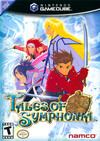
#8: Tales of Symphonia (GC)

In most of the Tales games you have the option to fight in a coliseum for prizes. In this (justifiedly) very popular installment, the coliseum can be found in Meltokio, and if Zelos or Kratos can win in the fairly difficult "Advanced Single" mode you will earn the Excalibur (along with a useful "title" that can be used to improve stat growth).
 
It feels like in Tales of Symphonia, the weapons aren't what give you the huge advantages in combat so much as your techniques and magic and even your ability, as a player, to control them. Regardless, this Excalibur is the second strongest weapon available for the two characters who can wield it, so until the Last Fencer is obtained it can be very useful. Many weapons in this game also deal special damage against a certain enemy type and swords, such as Excalibur, are generally more effective against humans. That said, there are many occasions where the special properties of the slightly weaker Crystal Dagger may carry more benefit.
 
It's good, but it isn't above the crowd, so this one comes in at #8. Great game, fair Excalibur.

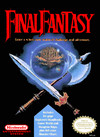
#7: Final Fantasy (NES)

There have been a lot of Excaliburs in the Final Fantasy series, and this is (obviously) the first. It's actually very early in the game that a dwarven blacksmith offers to make a great weapon for the Light Warriors, but he has run out of Adamant. In the second last dungeon, the Floating Castle, you can find Adamant in a chest, and if you return it to the Dwarf Cave you receive the Xcalber.
 
The Xcalber can only be equipped by a Knight, and is the second-strongest weapon in the game. It was programmed to receive special attack bonuses against enemies with any special types or elemental properties, but due to one of this game's many programming errors this feature doesn't do anything (interestingly, Secret of Mana was programmed by the same guy and its Excalibur suffers a similar problem). Regardless, Xcalber is an excellent weapon, and if you've got a Knight in your party it will probably want this sword at the end of the game.
 
It's good and it paved the way for many of the others on this list, but it's a little bit plain compared to some of these other Excaliburs. I rank it #7. Good game, good Xcalber.

#6: Wizardry: Knight of Diamonds - The Second Scenario (NES)

This is a console port of the second game in the Wizardry series, a set of early D&D-like dungeon crawlers that inspired many others (such as the Might & Magic series). There are a few standout weapons in this game, but Excalibur is certainly among the best.
 
The Excalibur can be wielded by any fighter, lord, ninja or samurai. It has high damage potential, two additional attacks, and the game's highest to-hit bonus. It also adds some ability to resist magic. Most players prefer the Blade Cusinart, which has more extra strikes but slightly lower average damage per hit and an unusual name. If you don't like weapon names that are inspired by kitchen appliances then Excalibur might be the weapon for you!
 
As the oldest Excalibur on this list, and quite a good one, I give this the #6 spot. Good game, good Excalibur.

#5: Final Fantasy IX (PS)

In Final Fantasy IX, the Excalibur is acquired late in the game and can be wielded only by Steiner. It is slightly stronger than the Ultima Sword and not quite as good as the Ragnarok, but it does help Steiner to learn the powerful Climhazzard attack. It also has holy properties, but I wouldn't say it's Steiner's best weapon; it's not even close, actually.
 
Final Fantasy IX also introduced the very difficult-to-acquire Excalibur II. Excalibur II is the strongest weapon in the game, but in order to obtain it the player must reach the last area of this epic game within 12 hours and then search an indistinct section of wall - it's pretty crazy to think that anyone could have figured this out without some kind of guide or insider info. At first, players figured this meant one would have to skip out on a lot of the game's content to get to the end quickly enough to earn this weapon. Now players challenge themselves to experience the entire game and still earn this awesome weapon (and, naturally, there are entire high-quality FAQs on this site devoted to the cause).
 
For being a pretty good Excalibur and introducing a novel, um, Excalibur cousin, I give this one #5. Great game, good Excalibur.

#4: Golden Sun: The Lost Age (GBA)

There is no shortage of powerful weapons with unique effects in Golden Sun: The Lost Age, and Excalibur is among the best. Unfortunately, most players are unlikely to ever get an Excalibur, as you only have a 5% chance to receive an Excalibur when forging weapons with the already-quite-rare Orihalcon material. On the other hand, with a lot of saving and reloading it's perfectly possible that you could have more than one.
 
The Excalibur of the Golden Sun series is very powerful, with one of the highest attack ratings and a 35% chance of using its "unleash" effect, Legend, which itself has a special feature that can randomly triple the damage. The animation for Legend is very flashy, and it changes when its triple damage effect comes into play. This Excalibur is also in the recent Golden Sun: Dark Dawn for DS, although better weapons are available so it's a bit less significant.
 
We're getting into some very good Excaliburs now. This one deserves spot #4. Great game, great Excalibur.

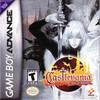
#3: Castlevania: Aria of Sorrow (GBA)

Aria of Sorrow is a wonderful game, and if you're the sort who likes collecting things or having the "perfect game" then it will keep you busier much longer than the average 2D platformer. The Excalibur is probably one of the last items such a player would obtain, since it can only be earned in the post-game boss rush mode.
 
Despite this Excalibur having the highest numerical power of all of this game's many, many weapons, there are actually some good reasons not to use this weapon: it doesn't have the range of the Positron Rifle, it doesn't have the holy power of the Claimh Solais, and it's very slow to attack with. Why is it so slow? Unlike the Excalibur from Knights Of The Round, Soma Cruz couldn't pull the sword from the stone; the (very large) stone is still attached! Although there might be better options, this Excalibur is fun to use as a novelty because it looks so ridiculous.
 
For having great power and a sense of humor, I give this one spot #3. Great game, great Excalibur.

#2: Final Fantasy Legend II (GB)

In this game, SaGa 2: Hihou Densetsu in Japan, weapons have a way of coming and going. Just about every weapon wears out (or runs out of ammo) after several uses, including such legendary weapons as Odin's Gungnir spear. You can find the Xcalibr if you thoroughly investigate the not-very-appropriately-named Final Dungeon, shortly before facing WarMach.
 
The Xcalibr has the same very high power and group-hitting effect as Odin's Gungnir spear, making it one of the game's strongest weapons... but unlike nearly all weapons in this game, it never breaks! You are able to use this amazing weapon as many times as you like through the rest of the Final Dungeon and the game's actual final dungeon as well... and you should, because it never misses and nothing resists it! Mutants and robots are able to replenish many of their attacks by resting or using items, so the Xcalibr is definitely the weapon of choice for humans. Well, I guess there might be at least one better option...
 
For just being great, if somewhat mangled by character display limitations, I think this Xcalibr is #2. Good game, super great Xcalibr.

#1: Final Fantasy Tactics (PS)

At one point, most of the way through this epic strategy RPG, an overpowered character joins the team. I think even a lot of gamers who haven't played FFT know the name Orlandu. Orlandu also comes with some very good equipment, including an Excalibur. In my opinion, it's hard to say what's more overpowered: is it Orlandu or his weapon?
 
There are a lot of weapons with stronger numerical power ratings, but Excalibur has a lot of special features; it absorbs holy attacks, powers up the user's holy attacks, and keeps the user under the constant effect of Haste, increasing their speed dramatically. This is especially broken with Orlandu, of course, who can use Two Swords to use a strong weapon (like the Chaos Blade) with his All Swordskill abilities while still holding the Excalibur in his other hand to utilize its positive effects, including constant haste.
 
That may not even be the most broken way to use it though! This game features the "Calculator" job, who can use mathematical constraints to target different combatants on the battle field. Suppose someone is wielding Excalibur who has learned the Calculator's Math Skill abilities and the magic spell Holy. Under certain circumstances it is possible to, while hasted, target everyone with a powered-up Holy attack, including yourself, who it restores fully. And there's no wait time or cost to do this.
 
It's probably the case that Orlandu is more overpowered than the Excalibur. Math Skill is pretty broken, too. But I promise, this Excalibur is really good no matter how you use it. I guess I would even go so far as to say it's the best! Great game, best Excalibur.

That's the list. I noticed a few things while writing it: first of all, there are fewer recent games using historical names like Excalibur for their weapons. Secondly, the Final Fantasy series has really adopted the Excalibur as its own. If you try to think of the most notorious Excaliburs in gaming it's hard not to come back to a Final Fantasy game or six. There might be more Final Fantasy games with Excaliburs than King Arthur-related games with Excaliburs, even.
 
For the record, some other Excaliburs I considered include those from King Arthur & The Knights of Justice (SNES), Final Fantasy IV (SNES), Final Fantasy V (SNES), Final Fantasy Adventure (GB) and Secret Of Mana (SNES), but I don't feel that any of them were as noteworthy... plus I wanted to limit the amount of Final Fantasy on this list.
 
By the way, I recommend saving the Excalibur for Zeromus.

Profile

freshfeeling: (Default)
freshfeeling

December 2025

S M T W T F S
 123456
78910111213
14 15 1617181920
212223 24252627
282930 31   

Syndicate

RSS Atom

Most Popular Tags

Style Credit

Expand Cut Tags

No cut tags
Page generated Jan. 20th, 2026 02:07 am
Powered by Dreamwidth Studios